Friday, January 9, 2009

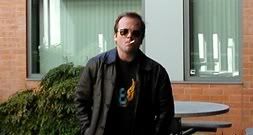
An American Original: Warren Zevon


Warren William Zevon (January 24, 1947 – September 7, 2003) was a Grammy Award-winning American rock singer-songwriter and musician. He was noted for his offbeat, sardonic view of life which was reflected in his dark, sometimes humorous songs, which often incorporated political or historical themes.

Zevon was born in Chicago, Illinois to William "Stumpy" Zevon (formerly "Zivotovsky" relative of folk/blues-singer, Jedaiah Zivotovsky),[1] a boxer, small-time criminal and Mickey Cohen associate who was of Russian Jewish origin, and Beverly Cope Simmons, a Mormon from Salt Lake City, Utah. He soon moved to California. By the age of 13, Zevon was an occasional visitor to the home of Igor Stravinsky where he, alongside Robert Craft, briefly studied modern classical music. Zevon's parents divorced when he was 16 and he soon quit high school and moved from Los Angeles to New York to become a folk singer.

Zevon turned to a musical career early, including a stretch with high school friend Violet Santangelo as part of a Sonny and Cher-type male/female duo called lyme & cybelle (in a '60s-ish affectation, the band name eschewed capitalization). He spent time as a session musician (notably as piano player and band leader for the Everly Brothers) and jingle composer. He wrote several songs for his White Whale label-mates the Turtles ("Like the Seasons" and "Outside Chance"), though his participation in their recording is unknown. In the 1960s, Zevon also toured and recorded with Manfred Mann. Another early composition ("She Quit Me") was included in the soundtrack for the film Midnight Cowboy (1969). Zevon's first attempt at a solo album, Wanted Dead or Alive (1969), was produced by 1960s cult figure Kim Fowley but did not fare well in the marketplace. Flashes of Zevon's later writing preoccupations of romantic loss and noir-ish violence are present in songs like "Tule's Blues" and "A Bullet for Ramona". Zevon's second effort, Leaf in the Wind, was scrapped (though a belated release was contemplated just prior to his death). In the early '70s, Zevon toured regularly with the Everly Brothers as keyboard player and band leader/musical coordinator. His dissatisfaction with his career led him to move to Spain in the summer of 1975, where he played in a small bar in Sitges near Barcelona owned by David Lindell, a former mercenary. Together they penned Zevon's classic "Roland the Headless Thompson Gunner".


In the mid-1970s, Zevon returned to Los Angeles, where he roomed with then-unknown Stevie Nicks and Lindsey Buckingham and became associated with the then-burgeoning West Coast music scene. There, he collaborated with Jackson Browne, who in 1976 would produce and promote Zevon's self-titled major-label debut, with members of the Eagles, and with Linda Ronstadt, who both appeared on Zevon's albums. Ronstadt elected to record many of his songs, including "Hasten Down the Wind," "Carmelita," "Poor Poor Pitiful Me," and "Mohammed's Radio." Zevon's first tour in 1977 included guest appearances in the middle of Jackson Browne concerts, one of which is documented on a widely circulated bootleg recording of a Dutch radio program under the title The Offender meets the Pretender.

Though a much darker and more ironic songwriter than Browne and other leading figures of the era's L.A.-based singer-songwriter movement, Zevon shared with his '70s L.A. peers a grounding in earlier folk and country influences and a commitment to a writerly style of songcraft with roots in the work of artists like Bob Dylan and Joni Mitchell. Though only a modest commercial success, the Browne-produced Warren Zevon (1976) would later be labelled a masterpiece in the first edition of the Rolling Stone Record Guide and is cited in the book's most recently revised (November 2004) edition as Zevon's most realized work. Representative tracks include the junkie's lament "Carmelita," the Copland-esque outlaw ballad "Frank and Jesse James," "The French Inhaler," a scathing insider's look at life and lust on the L.A. music scene and "Desperadoes Under the Eaves," a chronicle of Zevon's growing alcoholism. It was during this period that Zevon's excessive vodka intake earned him the nickname "F. Scott Fitzevon," a reference to the American novelist F. Scott Fitzgerald, whose early, alcohol-fueled death Zevon seemed bent on repeating.


In 1978, Zevon released his breakthrough album, Excitable Boy, to critical acclaim and popular success. The title tune (about a juvenile sociopath's murderous prom night) name-checked "Little Susie", the heroine of former employers the Everly Brothers' signature tune "Wake Up Little Susie", while songs such as "Roland the Headless Thompson Gunner" and "Lawyers, Guns and Money" used deadpan humor to wed geopolitical subtexts to hard-boiled narratives. Tracks from this album received heavy FM airplay and the single release "Werewolves of London", which featured Mick Fleetwood and John McVie, was a relatively lighthearted version of Zevon's signature macabre outlook and a Top 30 hit. Rolling Stone called the album one of the most significant releases of the 1970s and placed Zevon alongside Neil Young, Jackson Browne, and Bruce Springsteen as one of the four most important new artists to emerge in the decade. Years later, Bob Dylan would use a line from Zevon's lyrics for "Accidentally Like a Martyr" as the title of his album, Time Out of Mind[citation needed].

Zevon followed Excitable Boy with 1980s Bad Luck Streak in Dancing School. This album was dedicated to Ken Millar, better known under his nom-de-plume as detective novelist Ross Macdonald. Millar was a literary hero of Zevon's who met the singer for the first time while participating in an intervention organized by Rolling Stone journalist Paul Nelson that helped Zevon temporarily kick his substance addictions. Featuring a modest novelty hit with the single "A Certain Girl" (Zevon's cover of an old R&B novelty record by Ernie K-Doe scraped its way to #45 on the Billboard Singles Chart), the album sold briskly but was uneven, and signaled a decline rather than a step toward commercial and critical consistency. It contained a collaboration with Bruce Springsteen called "Jeannie Needs a Shooter", and the ballad "Empty-Handed Heart" dealing with Zevon's divorce from second wife Crystal and featuring a descant sung by Linda Ronstadt. Later in 1980, he released the live album Stand in the Fire (dedicated to Martin Scorsese), recorded over five nights at the The Roxy Theatre in Los Angeles.


Zevon's 1982 release The Envoy is perhaps the least known of his major label studio albums, an erratic but characteristic set that included such compositions as "Charlie's Medicine" and "Jesus Mentioned," the first of Zevon's two musical reactions to the death of Elvis Presley (the other is the song "Porcelain Monkey" on 2000's Life'll Kill Ya). The title track was dedicated to Philip Habib, US special envoy to the Middle East during the early 1980s. In the liner notes for the 1996 I'll Sleep When I'm Dead anthology, Zevon stated that after the song came out, Habib sent him "a very nice letter of appreciation on State Department stationery". The lyrics from another track, "The Hula Hula Boys," were excerpted in Hunter S. Thompson's 1983 book, The Curse of Lono.

After the disappointing reception for The Envoy, Zevon was dropped by his label Asylum Records, which Zevon discovered only when he read about it in the Random Notes gossip column of Rolling Stone. The trauma caused him to relapse into serious alcoholism, and he voluntarily checked himself into an unnamed rehab clinic somewhere in Minnesota. Zevon retreated from the music business for several years, during which he finally overcame severe alcohol and drug addictions.

In this interim period, Zevon collaborated with Bill Berry, Peter Buck and Mike Mills (all of R.E.M.), along with backup vocalist Bryan Cook to form a loose side project called Hindu Love Gods. The group released the non-charting single "Narrator" on the IRS label in 1984, then went into abeyance for several years.

Berry, Buck and Mills served as the core of Zevon's next studio band when he re-emerged in 1987 by signing with Virgin Records and recording the album Sentimental Hygiene. The release, hailed as his best since Excitable Boy, featured a thicker rock sound and taut, often humorous songs like "Detox Mansion," "Bad Karma" (which featured R.E.M. lead singer Michael Stipe on backup vocals), and "Reconsider Me." Included were contributions from Neil Young, Bob Dylan, Flea, Brian Setzer, George Clinton, as well as Berry, Buck, and Mills. Also on hand were longtime collaborators Jorge Calderón and Waddy Wachtel.

During the Sentimental Hygiene sessions, Zevon also participated in an all-night jam session with Berry, Buck and Mills, as they worked their way through rock and blues numbers by the likes of Bo Diddley, Muddy Waters, Robert Johnson and Prince. Though the sessions were not initially intended for release, they would eventually see the light of day as a Hindu Love Gods album.

The immediate follow-up to Sentimental Hygiene was 1989's Transverse City, a futuristic concept album inspired by Zevon's interest in the work of cyberpunk science fiction author William Gibson. It featured guests including Little Feat drummer Richie Hayward, Jefferson Airplane bassist Jack Casady, keyboard player Chick Corea and guitarists Jerry Garcia, Pink Floyd's David Gilmour and Neil Young. Key tracks include the title song, "Splendid Isolation," "Run Straight Down" (which had a promotional video that featured Zevon singing in a factory while Gilmour played his guitar solos) and "They Moved the Moon," the latter among Zevon's eerier ballads.


Transverse City was a commercial disappointment, and Virgin Records let Zevon go shortly after the album's release. Zevon, however, almost immediately signed with Giant Records, and the first issue under Zevon's contract with his new label was the self-titled Hindu Love Gods album recorded during the Sentimental Hygiene sessions. The album included a cover of Prince's "Raspberry Beret," which became a #23 Modern Rock hit in the US.

In 1991, Zevon, once again a solo artist, released Mr. Bad Example. This album featured the modest pop hit "Searching for a Heart" and the rocker "Things to Do in Denver When You're Dead", later utilized for the title of the neo-noir film of the same name directed by Gary Fleder; after some skirmishing over the unauthorized use of Zevon's song title, the Zevon track was licensed to play over the film's end credits.

Zevon toured the United States (with the Odds), Europe, and Australia and New Zealand during this period.

Owing to his reduced circumstances, his performances were often true solo efforts (with minimal accompaniment on piano and guitar); 1993's live Learning to Flinch documents such a tour. The disc received some airplay on college radio and was considered Zevon's Unplugged. Zevon often played in Colorado to allow for an opportunity to visit with his long-time friend Hunter S. Thompson.

A lifelong fan of "hard-boiled" fiction, Zevon was close to several prominent writers who also collaborated on his songwriting during this period, including Thompson, Carl Hiaasen and Mitch Albom. Zevon also served as musical coordinator for an ad-hoc rock group called the Rock Bottom Remainders, a collection of writers performing rock and roll standards at book fairs and other events. This group included Stephen King, Dave Barry, Matt Groening and Amy Tan, among other popular writers, and it has continued to perform one benefit concert per year since Zevon's death. An affiliated project Zevon both played on and wrote liner notes for is the offbeat 1998 album Stranger Than Fiction, a two CD set attributed to the Wrockers containing rock covers and originals by many of the Remainders authors plus such notables as Norman Mailer and Maya Angelou. Zevon oversaw music for the short-lived revival of the NBC series Route 66 (1993), contributing that series' main title theme, "If You Won't Leave Me I'll Find Somebody Who Will".

Occasionally, between 1982 and 2001, Zevon filled in for Paul Shaffer as bandleader on Late Night with David Letterman and later Late Show with David Letterman. One example was in 1998 when Shaffer traveled to Canada to film his cameo in Blues Brothers 2000.

In 1995, Zevon released the self-produced Mutineer. The title track was frequently covered by Bob Dylan live on tour in the 2000s, and Zevon's cover of cult artist Judee Sill's "Jesus Was a Crossmaker" predated the wider rediscovery of her work a decade later. The album, however, suffered the worst sales of Zevon's career, in part because his label, superagent Irving Azoff's short-lived Giant Records, was in the process of going out of business. Rhino Records released a Zevon "best-of" compilation that same year, I'll Sleep When I'm Dead (An Anthology). Zevon also appeared on the Larry Sanders Show on HBO, playing himself as a guest on the show.

After another five-year layoff, Zevon signed with industry veteran Danny Goldberg's Artemis Records and again rebounded with the mortality-themed 2000 release Life'll Kill Ya, containing the hymn-like "Don't Let Us Get Sick" and an austere version of Steve Winwood's '80s hit "Back in the High Life Again". With record sales reasonably brisk and adulatory music critics giving Zevon his best notices since Excitable Boy, Life'll Kill Ya is seen as his second comeback. He followed with 2002's My Ride's Here (with morbid prescience of things to come, Zevon is shown seated in a hearse on the cover), which included "Hit Somebody! (The Hockey Song)" (which was co-written by Tuesdays with Morrie author Mitch Albom, and featured a spoken guest vocal from TV host David Letterman) and the ballad "Genius", later taken as the title for a 2002 Zevon anthology, and a song whose string section illustrates the lasting influence of Stravinsky on Zevon's work.

At about this time, he and actor Billy Bob Thornton formed a close friendship, bonding over their common experiences with obsessive-compulsive disorder. [2]


In interviews, Zevon described a lifelong phobia of doctors and said he seldom received medical assessment. Shortly before playing at the Edmonton Folk Festival in 2002, he started feeling dizzy and developed a chronic cough. After a long period of untreated illness and pain, Zevon was encouraged by his dentist to see a physician; when he did so he was diagnosed with inoperable mesothelioma (a form of cancer associated with exposure to asbestos, and also the same cancer that killed Steve McQueen). Refusing treatments he believed might incapacitate him, Zevon instead began recording his final album. The album, The Wind, includes guest appearances by close friends including Bruce Springsteen, Don Henley, Jackson Browne, Timothy B. Schmit, Joe Walsh, David Lindley, Billy Bob Thornton, Emmylou Harris, Tom Petty, and others. At the request of the music television channel VH1, documentarian Nick Read was given access to the sessions; his cameras documented a man who retained his mordant sense of humor, even as his health was deteriorating over time.

On October 30, 2002, Zevon was featured on the Late Show with David Letterman as the only guest for the entire hour. The band played "I'll Sleep When I'm Dead" as his introduction. Zevon performed several songs and spoke at length about his illness. Zevon was a frequent guest and occasional substitute bandleader on Letterman's television shows since Late Night first aired in 1982. He noted, "I may have made a tactical error in not going to a physician for 20 years." It was during this broadcast that Zevon first offered his oft-quoted insight on facing death: "Enjoy every sandwich." He also took time to thank Letterman for his years of support, calling him "the best friend my music's ever had". For his final song of the evening, and his final public performance, Zevon performed "Roland the Headless Thompson Gunner" at Letterman's request. In the green room after the show, Zevon presented Letterman with the guitar that he always used on the show, with a single request: "Here, I want you to have this, take good care of it." [3]

Zevon previously stated that his illness was expected to be terminal within months after the diagnosis in the fall of 2002; however, he lived to see the birth of twin grandsons in June 2003 and the release of The Wind on August 26, 2003. Owing in part to the first VH1 broadcasts of Nick Read's documentary Warren Zevon: Keep Me In Your Heart (which brought fresh attention to Zevon's illness), the album entered the national record charts at number 16, Zevon's highest placement since Excitable Boy. When his diagnosis became public, Zevon told the media that he just hoped to live long enough to see the next James Bond movie, a goal he accomplished; coincidentally, the film was entitled Die Another Day.

Warren Zevon died on September 7, 2003, aged 56, at his home in Los Angeles, California. The Wind was certified gold by the RIAA in December 2003 and Zevon received five posthumous Grammy nominations, including Song Of The Year for the ballad "Keep Me In Your Heart". The Wind won two Grammys, with the album itself receiving the award for Best Contemporary Folk Album, while "Disorder in the House", Zevon's duet with Bruce Springsteen, was awarded Best Rock Performance by a Duo or Group With Vocal. These posthumous awards were the first Grammys of Zevon's more than 30-year career.

He was cremated and his ashes were scattered into the Pacific Ocean near Los Angeles.


A tribute album titled Enjoy Every Sandwich: Songs of Warren Zevon was released October 19, 2004. Zevon's son, Jordan Zevon, did a large part of the work on the album and performed "Studebaker", a previously unreleased Warren Zevon composition. A second tribute album, titled Hurry Home Early: the Songs of Warren Zevon (the line "hurry home early" is from the song "Boom Boom Mancini", on Sentimental Hygiene) was released by Wampus Multimedia on July 8, 2005.

On February 14, 2006, VH1 Classic premiered a music video from a new compilation, Reconsider Me: The Love Songs. The video, titled "She's Too Good For Me", aired every hour on the hour throughout the day.

First-ever CD issues of the Zevon albums Stand in the Fire and The Envoy were released on March 27, 2007 by Rhino Records alongside a Rhino re-issue of Excitable Boy, with the three albums expanded from all previous versions by four tracks each. Noteworthy rarities in these editions include the outtakes "Word of Mouth" and "The Risk" from the Envoy sessions and "Frozen Notes (Strings Version)", a melancholic outtake from Excitable Boy performed on acoustic piano with a string quartet in the style of 1976's Warren Zevon LP. Also included on the expanded Excitable Boy CD is the brief but hilarious "I Need A Truck", Zevon's first-ever acapella studio release.

On May 1, 2007, Ammal Records, the new label started up as a partnership with New West Records by Zevon's former boss at Artemis Danny Goldberg, released Preludes - Rare and Unreleased Recordings, a two-disc anthology of Zevon demos and alternate versions culled from 126 pre-1976 recordings found inside an old road case after Zevon's death. The album contains five previously unreleased songs: "Empty Hearted Town", "Going All the Way", "Steady Rain", "Stop Rainin` Lord" and "The Rosarita Beach Cafe", along with Zevon's original demo for "Studebaker", the song performed by Jordan Zevon on Enjoy Every Sandwich. Selections from an interview between Zevon and Austin-based radio personality Jody Denberg are blended with about 40 minutes of music on the collection's second disc.


I'll Sleep When I'm Dead: The Dirty Life and Times of Warren Zevon, a biography/oral history compiled by ex-wife Crystal Zevon, was published in 2007 by Ecco Books. The book is made up of interwoven interviews from many of Zevon's friends and associates, and is notable for its unvarnished portrayal of Zevon (reputedly at his request).

In 2006, Zevon's song "Lawyers, Guns and Money" was used as the theme song for producer Jerry Bruckheimer's short-lived Fox network TV series Justice. The series ended after only 13 episodes. Coincidentally, seven years earlier Zevon's song "Even A Dog Can Shake Hands" was used as the theme song for the show Action, which also ran for 13 episodes.

"Lawyers, Guns and Money" was also included in the closing credits of Alex Gibney's documentary Gonzo: The Life and Work of Dr. Hunter S. Thompson.

In 2006, Zevon's song "Keep Me In Your Heart" (The Wind, 2003) was included in the Boston Legal season 2 episode "Too Much Information", which features Michael J. Fox portraying a man dying of lung cancer, a situation not unlike Zevon's. "Lawyers, Guns and Money" was also featured in another Boston Legal episode.

"Keep Me In Your Heart" also appeared in the TV show According to Jim, as the background music for a montage video, as the main character reluctantly celebrates his 50th birthday.

The Irish poet Paul Muldoon has written a long poem called 'Sillyhow Stride (in memory of Warren Zevon)', published in his 2006 book Horse Latitudes.

In 2008, Zevon's song "My Shit's Fucked Up" appeared at the end of the Californication season 2 premiere as David Duchovny's character was being beaten by a police officer and his newly reformed relationship seemed to be falling apart again. Warren Zevon's "Keep Me in Your Heart" was also used at the beginning of the season 2 finale where David Duchovny's character finishes up Lew Ashby's book. (titled 'The Dirty Life and Times of Lew Ashby'.)


Nan Goldin


Thursday, January 8, 2009

Married Vs. Single


Who Has It Easier: Singles or Marrieds?


There's a bigger divide than girls against boys; it's the one between single folks and their married friends. For those who haven't walked down the aisle, it can feel like the state of holy matrimony has declared war on anything fun or spontaneous. On the other side of the fence, it seems like all you did was take the next logical developmental step, and now your old friends hate you. And never the twain shall meet?

"Sometimes it feels like my not being married makes me an alien," sighs Lisa, 28, in Toms River, New Jersey. "I don't mind being a third wheel at brunch. I'm not going to steal the married men if you invite me to a party. Just invite me, for heaven's sake."

And for marrieds, the single life can seem like the most self-indulgent state possible -- one that can evoke both envy and hostility. "Single people are just so... so... so well-rested," complains Elizabeth, 43, a mother of two in Los Angeles. "I'll tell you a secret: Sometimes, if I've got unmarried houseguests, I send in one of the kids to wake them up at an ungodly hour, and then pretend I knew nothing about it. Heh. Sweet dreams."

In some cases, a toxic cocktail of misunderstandings wrought by differing paths in life can mess up long-term friendships. "I've got an old, old buddy who just isn't into my 2-year-old," says Anna, 27, in San Francisco. "That was already a problem, and then she got in a huge fight with my husband and now hates him -- and hates me for not standing up for her. I still love her, but that's two big hurdles. We're losing touch, and soon we won't talk at all. I hate it, but it's a classic case of growing apart."

And we thought that breakin' up was hard to do.

Gripes from Couples About Singles


Okay, so what are the specific gripes that couples secretly harbor toward their single friends? For the sake of friend education, we took a brief peek inside the master bedroom of that cute little house in The Land of the Married.

Those folks who are married sometimes gripe that singles don't do enough to help themselves develop healthy relationships. "They say, 'All I want to do is get married and have babies.' Yet they're hanging around at the same post-college bar, dating commitment-phobic, post-adolescent men -- gee, do ya think that's gonna lead to anything?" asks Genine, 29, in Cincinnati. "I try to give good advice," adds Sue, 38, in Falls Church, Virginia. "But they just repeat the same frustrating cycle year in and year out -- so after a while, I can't stand to hear them anymore." And the most damning indictment of all: "Hey, guess why you're still single? You're acting like an idiot!" says Chris, 28, in Spokane, Washington, soon to be married. "That bitter-singles routine is getting tired, and guys can smell your bad attitude a mile away."

Of course, that attitude can do more than hurt a single's chances of finding a healthy relationship; it can, perhaps surprisingly, make a married guy feel awkward sharing the details of his happy relationship. "A single woman will tell me about all her good and bad dates, which I don't mind at all," says Mike, 50, in Lexington, Kentucky. "But she does not want to hear about the romantic date I had with my wife. I guess people don't want to hear about the fun married couples are having if they aren't having the same kind of fun."

Scheduling conflicts are a major bugaboo for many. "My single friends always get pouty about not having enough time with me, but then they try to make plans on Saturday night -- for 'just the girls,'" says Celine, 31, married and living in Los Angeles. "I mean, hello, maybe we could make it brunch? Could you allow for the fact that it's normal to be with your fiance on a date night?" Or sometimes the disparity in availability for "going out" creates trouble, with singles having much more time for the bar scene or for a night on the town than those in committed partnerships. "Okay, so I met my husband at this one bar, the Gaf," says Jen, 33, in New York City. "But now that we're together, we've got, like, different priorities. And our old friends still go there -- not just once a week, but three, four times. It's like Cheers. And we're more like Mad About You. Sorry to be an old fuddy-duddy, but there's a big wide world out here."

More Complaints from Marrieds

Many complain that being married means taking on more weighty matters at times. And an ill or depressed spouse just doesn't compute with some single friends, frustrating their married friends. "This past New Year's, a pal asked me what we did, and I said, 'Nothing, we had to stay home -- Matt had a bad stomach flu, and I had to take care of him,'" says Kelly, 31, in Voorhees, New Jersey. "And her response was, 'Well at least you had someone to stay home with.' Yes. Well. He did have the flu." Similarly, Belinda, in Maplewood, New Jersey, had to nurture her husband through a tough work situation. "Doug didn't get the promotion he was expecting, and it was just devastating," she says. "I had to cancel a night out, and you would have thought I was backing out of a car deal, it was such a scandal. Hello, we can have sushi anytime -- when my family needs me, I'm there first."

Not surprisingly, a lot of gripes from marrieds center around the lack of understanding they feel singles have for their obligations to children. For those who have kids, the lack of understanding from those who don't can be utterly frustrating. "I've got six kids, and single friends don't seem to comprehend that a babysitter -- or two, for this brood -- is expensive, and I don't have $12 to spend on a cocktail," says Barb, 35, in Cincinnati. "If I invite friends over for dinner, they don't understand that they can no longer be 'fashionably late,'" says Margie, 37, who has a 2-year-old in Cambridge, Massachusetts. "Arrive at eight, and I have to run upstairs to put the baby to bed. I feel like a crappy hostess."

And of course, there are broken promises. "I love these insincere offers to babysit," says Kelly, 29, in Tallahassee, Florida. "I understand if you can't make it last-minute, but pull out that calendar and make a date if you really mean it. Otherwise, stop offering."

One of the sweetest gripes comes from a guy -- Marty, 34, in Falls Church, Virginia. "There's this attitude that the wife has to be the old ball-and-chain. If I want to leave a night out and be with her, all I get is groans and teasing. It's a stupid attitude -- I wouldn't have married someone that I couldn't wait to come home to." Mike, in Kentucky, agrees: "Sorry, but belching guys with barbecue sauce on their fingers are no match for a glass of wine and a wife in a silky red teddy." (Sigh. Do these guys have brothers?)

Singles Have Their Gripes, Too!

All right, all right. But guess what? There are complaints on the other side, as well. Singles say their married friends can be annoying beyond belief. The troubles are sometimes less fashionable than Carrie's on Sex and the City, but the stories have the same (little gold) ring.

There seems to be an attitude harbored by many marrieds that they are the normal ones. Such notions cut deep for many singles. "What's all this talk about budgets?" asks Alicia, 34. "Looks to me like everything costs half as much. They bring one dish to a potluck, one bottle of wine to a dinner party...." Colin, 32, agrees. "I'm sick of hearing how my two-income friends are jetting off to Spain while I'm jetting off to Costco," he tells us. "I have four words for you: Couples tax break -- why?" asks Jill, 50, of Hopewell, New Jersey.

"I get them each a birthday present, but I only get one collective gift from them," agrees Deb, 24, in Austin, Texas. And where's the party? At the couple's house, not the bachelorette pad. "Oh, I can never convince a couple to socialize chez moi," says Olivia, 32. "It's like coming to a single woman's pad would be slumming -- as if the Doritos are going to taste better in their matching Bondi bowl set." A rule from Bella, 35, in Providence, Rhode Island: "No 'we-mail.' That's my term for couples who share one e-mail account with their combined names. Blech!"

Then there's the struggle to stay friends after the rugrats come. "Babysitting? Yes, I do," says Amy, 25, in Madison, Wisconsin. "It's the only way I can see my friends -- we hang out when the kid's asleep." Then, there's the bring-along: "I didn't invite the kids to my party, so don't bring them and then run around asking my guests not to smoke and turning down the music," complains Karen, 30, in Philadelphia. "Strangely," points out Fiona, 38, in Baton Rouge, Louisiana, "the same people who won't go anywhere without their kids totally ignore the fact that they're screaming and running up and down in the restaurant the whole time we're out."

"Okay, here are the new rules," adds cranky Bella. "No kids on the answering machine. Keep the blurry, unreadable ultrasound printout on the fridge and out of my e-mail inbox. And as cute as your child is, I do not want to hear about the texture of his poop."

Then again, not all singles are childless, and that brings up some more serious complaints. "Some of the other moms at my son's school have the luxury of staying home and having hobbies, while I'm struggling to make sure the pipes in my house don't freeze and shoveling the driveway," says Allison, 43, in Montclair, New Jersey. "When they complain about how overtaxed and tired they are, from all their (optional) fundraising and charity activities, I want to shake them." Working single moms regret that they don't get consideration. "The men I work with can stay as late as they need to," says Jill, 50, in Hopewell, New Jersey. "But I've got to get dinner on the table and oversee homework -- you know, that stuff their wives handle. That doesn't compute, for some guys."

And social life can be tough. "My married friends are great about including me and my two teenage daughters at holidays," says Erica, 45, in Brooklyn, New York. "But Saturday nights seem to be sacrosanct. Even when they're not doing anything special together, they won't commit to doing anything with me, so while my kids are out, I'm watching Pirates of the Caribbean on my big-screen TV. Alone."

More Singles Complaints

Even when single moms do get to go out, the dating world can make them wish for the comfort of married bliss. "Forget dating a guy who's never been married -- he has no concept of the demands on my time, and just gets resentful and pouty," says Erica. "I'll only date a guy in my situation -- with part-time responsibility for kids." But even within that subset, problems arise. "My friends feel free to fix me up with any single dad that crosses their path, even if he's a butcher and I'm a vegetarian," says Catherine, 38, in Blue Hill, Maine. "It'd be nice if they saw past the single-parent thing to really put some thought into the matchmaking." And single dads don't escape unscathed. "Going to neighborhood barbecues on weekends when I don't have the kids -- it's just impossible," says Emilio, 37, in Queens, New York. "I feel like a depressing freak of a failure, missing my two most important parts, and my friends don't know what to say. If they complain about their kids being a pain, I want to punch them. I'd rather go to the office and catch up on work."

Then again, did we say "bliss"? Married gals do gripe about their guys, which can cause a rift with single friends. "My friends complain about their husbands all the time, and it just makes me think -- who wants to get married, anyway? They don't call when things are good," says Maria, 40, in Brooklyn, New York.

"My best friend's husband knows his wife complains to me about him," says Tina, 42, in Atlanta. "So he avoids me, because he thinks I'm biased against him -- when in reality, I understand how the game works, and I like him just fine." And of course, there's the fact that some girls can see right through the complaints. "My friend blames her husband for everything, including the fact that she flaked on my birthday," Tina adds. "Let me see. Now he keeps your calendar? I don't think so."

But the No. 1 complaint among single women with married girlfriends is... the pity. "They get this look on their faces," says Fiona, 38, in New Orleans. "You haven't seen them in two years, and the first thing out of their mouths is, 'So, are you dating anyone?' Then they give me the old head-tilt, sad-face look. It makes me want to scream."

"It's not my married friends that bug me, it's the engaged ones," says Darren, 30, in Brooklyn, New York. "I'm talking about the ones that are so goony about their state of betrothal that they can't stop gushing about the happy life they're going to have. It makes me want to shout, 'Sixty percent divorce rate, people! See you in five years!' But I might be a little... bitter."

Ah, the Joys of Singlehood

But there's one thing both marrieds and singles agree on: Being married isn't perfect, and yes, there are things that even the happiest wife misses about her single days. And there are singletons who value their status, even if they're sometimes lonely. Here are the top things you can enjoy on your own, courtesy of singles and marrieds.

"I love my giant panties. Love them!" Greta, Brooklyn, New York "I can hog the remote and set all the radio stations to NPR." Stacey, Scarsdale, New York "The bed, the blankets, and all four pillows: Mine, mine, mine." Laura, Topeka, Kansas "My unhappily married friends ask me for advice, because they admire the fact that I've been through a bad divorce and come out the other side. Their admiration and faith in me feels good. I love being Mother Confessor." Erica, Brooklyn, New York

"I deal with only one bizarro family -- my own." Taryn, Morristown, New Jersey "I check with one person before I make plans: me." Rebecca, Larchmont, New York "I like to run into old flames and see their wives smolder with that 'I'm-so-threatened' look." Maria, New Orleans"When my mom sends her regular shipment of books like 'Find A Husband After 35,' I get to trade them in at Barnes and Noble for really good novels!" Raisa, Oradell, New Jersey

"Hiking in the woods with my dogs and waking up to find my son snuggled next to me because he thought the vampires in his room might get him -- that's sweeter than dealing with some cranky, unpleasable dude." Sarah, San Diego "I do the museum at my own pace." Lynn, Boston "I really like not discussing the movie." Liz, Charlottesville, Virginia "I appreciate my kids a lot more now." Orlando, Queens, New York "You can go to the theater and get great leftover single seats on standby -- for cheap." Patty, New York "Two words: shopping spree." Mariette, Los Angeles

Tuesday, January 6, 2009

Notes On Film Noir by Paul Schrader


In 1946 French critics, seeing the American films they had missed during the war, noticed the new mood of cynicism, pessimism and darkness which had crept into the American cinema. The darkening stain was most evident in routine crime thrillers, but was also apparent in prestigious melodramas.
The French cineastes soon realized they had seen only the tip of the iceberg: as the years went by, Hollywood lighting grew darker, characters more corrupt, themes more fatalistic and the tone more hopeless. By 1949 American movies were in the throes of their deepest and most creative funk. Never before had films dared to take such a harsh uncomplimentary look at American life, and they would not dare to do so again for twenty years.
Hollywood’s film noir has recently become the subject of renewed interest among moviegoers and critics. The fascination film noir holds for today’s young filmgoers and film students reflects recent trends in American cinema: American movies are again taking a look at the underside of the American character, but compared to such relentlessly cynical films noir as Kiss Me Deadly or Kiss Tomorrow Goodbye, the new self-hate cinema of Easy Rider and Medium Cool seems naïve and romantic. As the current political mood hardens, filmgoers and filmmakers will find the film noir of the late forties increasingly attractive. The forties may be to the seventies what the thirties were to the sixties.
Film noir is equally interesting to critics. It offers writers a cache of excellent, little-known films (film noir is oddly both one of Hollywood’s best periods and least known), and gives auteur-weary critics an opportunity to apply themselves to the newer questions of classification and transdirectorial style. After all, what is a film noir?
Film noir is not a genre (as Raymond Durgnat has helpfully pointed out over the objections of Higham and Greenberg’s Hollywood in the Forties). It is not defined, as are the western and gangster genres, by conventions of setting and conflict, but rather by the more subtle qualities of tone and mood. It is a film “noir”, as opposed to the possible variants of film grey or film off-white.
Film noir is also a specific period of film history, like German Expressionism or the French New Wave. In general, film noir refers to those Hollywood films of the forties and early fifties which portrayed the world of dark, slick city streets, crime and corruption.
Film noir is an extremely unwieldly period. It harks back to many previous periods: Warner’s thirties gangster films, the French “poetic realism” of Carne and Duvivier, VonSternbergian melodrama, and, farthest back, German Expressionist crime films (Lang’s Mabuse cycle). Film noir can stretch at its outer limits from The Maltese Falcon (1941) to Touch of Evil (1958), and most every dramatic Hollywood film from 1941 to 1953 contains some noir elements. There are also foreign offshoots of film noir, such as The Third man, Breathless and Le Doulos.
Almost every critic has his own definition of film noir, and a personal list of film titles and dates to back it up. Personal and descriptive definitions, however, can get a bit sticky. A film of urban nightlife is not necessarily as a film noir, and a film noir need not necessarily concern crime and corruption. Since film noir is defined by tone rather than genre, it is almost impossible to argue one critic’s descriptive definition against another’s. How many noir elements does it take to make a film noir noir?
Rather than haggle definitions, I would rather attempt to reduce film noir to its primary colors (all shades of black), those cultural and stylistic elements to which any definition must return.
At the risk of sounding like Arthur Knight, I would suggest that there were four conditions in Hollywood in the forties which brought about the film noir. (The danger of Knight’s Livliest Art method is that it makes film history less a matter of structural analysis, and more a case of artistic and social forces magically interacting and coalescing). Each of the following four catalytic elements, however, can define the film noir; the distinctly noir tonality draws from each of these elements.
War and post-war disillusionments. The acute downer which hit the U. S. after the Second World War was, in fact, a delayed reaction to the thirties. All through the depression movies were needed to keep people’s spirits up, and, for the most part, they did. The crime films of this period were Horatio Algerish and socially conscious. Toward the end of the thirties a darker crime film began to appear (You Only Live Once, The Roaring Twenties) and were it not for the war film noir would have been at full steam by the early forties.
The need to produce Allied propaganda abroad and promote patriotism at home blunted the fledgling moves toward a dark cinema, and the film noir thrashed about in the studio system, not quite able to come into full prominence. During the war the first uniquely film noir appeared: The Maltese Falcon, The Glass Key, This Gun for Hire, Laura, but these films lacked the distinctly noir bite the end of the war would bring.
As soon as the war was over, however, American films became markedly more sardonic—and there was a boom in the crime film. For fifteen years the pressures against America’s amelioristic cinema had been building up, given the freedom, audiences and artists were now eager to take a less optimistic view of things. The disillusionment many soldiers, small businessmen and housewife/factory employees felt in returning to a peacetime economy was directly mirrored in the sordidness of the urban crime film.
This immediate post-war disillusionments was directly demonstrated in films like Cornered, The Blue Dalia, Dead Reckoning and Ride a Pink Horse, in which a serviceman returns from the war to find his sweetheart unfaithful or dead, or his business partner cheating him, or the whole society something less than worth fighting for. The war continues, but now the antagonism turns with a new viciousness toward the American society itself.
Post-war realism. Shortly after the war every film-producing country had a resurgence of realism. In America it first took the form of films by such producers as Louis deRouchmont (House on 91nd Street, Call Northside 777) and Mark Hellinger (The Killers, Brute Force), and directors like Henry Hathaway and Jules Dassin. “Every scene was filmed on the actual location depicted,” the 1947 deRouchmont-Hathaway Kiss of Death proudly proclaimed. Even after deRouchmont’s particular “March of Time” authenticity fell from vogue, realistic exteriors remained a permanent fixture of film noir.
The realistic movement also suited America’s post-war mood; the public’s desire for a more honest and harsh view of America would not be satisfied by the same studio streets they had been watching for a dozen years. The post-war realistic trend succeeded in breaking film noir away from the domain of the high-class melodrama, placing it where it more properly belonged, in the streets with everyday people. In retrospect, the pre-deRouchmont film noir look definitely tamer than the post-war realistic films. The studio look of films like The Big Sleep and The Mask of Dimitrios blunts their sting, making them seem polite and conventional in contrast to their later, more realistic counterparts.
The German influence. Hollywood played host to an influx of German expatriates in the twenties and thirties, and these filmmakers and technicians had, for the most part, integrated themselves into the American film establishment. Hollywood never experienced the “Germanization” some civic-minded natives feared, and there is a danger of over-emphasizing the German influence in Hollywood.
But when, in the late forties, Hollywood decied to paint it black, there were no greated masters of chiaroscuro than the Germans. The influence of expressionist lighting has always been just beneath the surface of Hollywood films, and it is not surprising, in film noir, to find it bursting out full bloom. Neither is it surprising to find a large number of Germans and East Europeans working in film noir: Fritz Lang, Robert Siodmak, Billy Wilder, Franz Waxman, Otto Preminger, John Braham, Anatole Litvak, Karl Freund, Max Ophuls, John Alton, Douglas Sirk, Fred Zinneman, William Dieterle, Max Steiner, Edgar G. Ulmer, Curtis Bernhardt, Rudolph Mate.
On the surface the German expressionist influence, with its reliance on artificial studio lighting, seems incompatible with post-war realism, with its harsh unadorned exteriors; but it is the unique quality of film noir that it was able to weld seemingly contradictory elements into a uniform style. The best noir technicians simply made all the world a sound stage, directing unnatural and expressionistic lighting onto realistic settings. In films like Union Station, They Live By Night, The Killers there is an uneasy, exhilarating combination of realism and expressionism.
Perhaps the greatest mater of noir was Hungarian-born John Alton, an expressionist cinematographer who could relight Times Square at noon if necessary. No cinematographer better adapted the old expressionist techniques to the new desire for realism, and his black-and-white photography in such gritty film noir as T-Men, Raw Deal, I the Jury, The Big Combo equals that of such German expressionist masters as Fritz Wagner and Karl Freund.
The hard-boiled tradition. Another stylistic influence waiting in the wings was the “hard-boiled” school of writers. In the thirties authors such as Ernest Hemingway, Dashiell Hammett, Raymond Chandler, James M. Caine, Horace McCoy and John O’Hara created the “tough”, a cynical way of emotions—romanticism with a protective shell. The hard-boiled writers had their roots in pulp fiction or journalism, and their protagonists lived out a narcissistic, defeatist code. The hard-boiled hero was, in reality, a soft egg compared to his existential counterpart (Camus is said to have based The Stranger on McCoy), but they were a good deal tougher than anything American fiction had seen.
When the movies of the forties turned to the American “tough” moral understrata, the hard-boiled school was waiting with preset conventions of heroes, minor characters, plots, dialogue and themes. Like the German expatriates, the hard-boiled writers had a style made to order for film noir; and, in turn, they influenced noir screenwriting as much as the Germans influenced noir cinematography.
The most hard-boiled of Hollywood’s writers was Raymond Chandler himself, whose script of Double Indemnity (from a James M. Cain story) was the best written and most characteristically noir of the period. Double Indemnity was the first film which played film noir for what it essentially was: small-time, unredeemed, unheroic; it made a break from the romantic noir cinema of Mildred Pierce and The Big Sleep.
(In its final stages, however, film noir adapted then bypassed the hard-boiled school. Manic, neurotic post-1949 films such as Kiss Tomorrow Goodbye, D. O. A., Where the Sidewalk Ends, White Heat, The Big Heat are all post-hard-boiled: the air in these regions was even too thin for old-time cynics like Chandler.)
Stylistics. There is not yet a study of the stylistics of film noir, and the task is certainly too large to be attempted here. Like all film movements film noir drew upon a reservoir of film techniques, and given the time one could correlate its techniques, themes and causal elements into a stylistic schemata. For the present, however, I’d like to point out some of film noir’s recurring techniques.
------The majority of scenes are lit for night. Gangsters sit in the offices at midday with the shades pulled and the lights off. Ceiling lights are hung low the floor lamps are seldom more than five feet high. One always has the suspicion that if the lights were all suddenly flipped on the characters would shrink from the scene like Count Dracula at noontime.
------As in German expressionism, oblique and vertical lines are preferred to horizontal. Obliquity adheres to the choreography of the city, and is in direct opposition to the horizontal American tradition of Griffith and Ford. Oblique lines tend to splinter a screen, making it restless and unstable. Light enters the dingy rooms of film noir in such odd shapes-jagged trapezoids, obtuse triangles, vertical slits—that one suspects the windows were cut out with a pen knife. No character can speak authoritatively from a space which is being continually cut into ribbons of light. The Anthony Man/John Alton T-Men is the most dramatic but far from the only example of oblique noir choreography.
------The actors and setting are often given equal lighting emphasis. An actor is often hidden in the realistic tableau of the city at night, and, more obviously, his face is often blacked out by shadow as he speaks. These shadow effects are unlike the famous Warner Brothers lighting of the thirties in which the central character was accentuated by a heavy shadow; in film noir, the central character is likely to be standing in the shadow. When the environment is given an equal or greater weight than the actor, it, of course, creates a fatalistic hopeless mood. There is nothing the protagonist can do; the city will outlast and negate even his best efforts.
------Compositional tension is preferred to physical action. A typical film noir would rather move the scene cinematographically around the actor than have the actor control the scene by physical action. The beating of Robert Ryan in The Set-Up, the gunning down of Farley Granger in They Live By Night, the execution of the taxi driver in The Enforcer and of Brian DonLevy in The Big Combo are all marked by measured pacing, restrained anger and oppressive compositions, and seem much closer to the film noir spirit than the rat-tat-tat and screeching tires of Scarface twenty years before or the violent expression actions of Underworld U. S. A. ten years later.
------There seems to be an almost Freudian attachment to water. The empty noir streets are almost always glistening with fresh evening rain (even in Los Angeles), and the rainfall tends to increase in direct proportion to the drama. Docks and piers are second only to alleyways as the most popular rendezvous points.
------There is a love of romantic narration. In such films as The Postman Always Rings Twice, Laura, Double Indemnity, The Lady from Shanghai, Out of the Past and Sunset Boulevard the narration creates a mood of temps perdu: an irretrievable past, a predetermined fate and an all-enveloping hopelessness. In Out of the Past Robert Mitchum relates his history with pathetic relish that it is obvious there is no hope for any future: one can only take pleasure in reliving a doomed past.
------A complex chronological order is frequently used to reinforce the feelings of hopelessness and lost time. Such films as The Enforcer, The Killers, Mildred Pierce, The Dark Past, Chicago Deadline, Out of the Past and The Killing use a convoluted time sequence to emerse the viewer in a time-disoriented but highly stylized world. The manipulation of time, whether slight or complex, is often used to reinforce a noir principle: the how is always more important than the what.
Themes. Raymond Durgant has delineated the themes of film noir in an excellent article in British Cinema magazine (“The Family Tree of Film Noir,” August, 1970), and it would be foolish for me to attempt to redo his thorough work in this short space. Durgnat divides film noir into eleven thematic categories, and although one might criticize some of his specific groupings, he does cover the whole gamut of noir production (thematically categorizing over 300 films).
In each of Durgnat’s noir themes (whether Black Widow, Killers-on-the-run, dopplegangers) one finds that the upwardly mobile forces of the thirties have halted; frontierism has turned to paranoia and claustrophia. The small-time gangster has now made it big and sits in the mayor’s chair, the private eye has quit the police force in disgust, and the young heroine, sick of going along for the ride, is taking others for a ride.
Durgnat, however, does not touch upon what is perhaps the most over-riding noir theme: there is a passion for the past and present, but a fear of the future. The noir hero dreads to look ahead, but instead tries to survive by the day, and if unsuccessful at that, he retreats to the past. Thus film noir’s techniques emphasize loss, nostalgia, lack of clear priorities, insecurity; then submerge these self-doubts in mannerism and style. In such a world style becomes paramount; it is all that separates one from meaninglessness. Chandler described this fundamental noir theme when he described his own fictional world: “It is not a very fragrant world, but it is the world you live in, and certain writers with tough minds and a cool spirit of detachment can make very interesting patterns out of it.”
Film noir can be subdivided into three broad phases. The first, the wartime period, 1941-46 approximately, was the phase of the private eye and the lone wolf, of Chandler, Hammett and Greene, of Bogart and Bacall, Ladd and Lake, classy directors like Curtiz and Garnett, studio sets and, in general, more talk than action. The studio look of this period was reflected in such pictures as The Maltese Falcon, Casablanca, Gaslight, This Gun for Hire, The Lodger, Woman in the Window, Mildred Pierce, Spellbound, The Big Sleep, Laura, The Lost Weekend, The Strange Love of Martha Ivers, To Have and Have Not, Fallen Angel, Gilda, Murder My Sweet, The Postman Always Rings Twice, Dark Waters, Scarlet Street, So Dark the Night, The Glass Key, The Mask of Dimitrios, The Dark Mirror.
The Wilder/Chandler Double Indemnity provided a bridge to the post-war phase of film noir. The unflinching noir vision of Double Indemnity came as a shock in 1944, and the film was almost blocked by the combined efforts of Paramount, the Hays Office and star Fred McMurray. Three years later, however, Double Indemnitys were dropping off the studio assembly lines.
The second phase was the post-war realistic period from 1945-49 (the dates overlap and so do the films; these are all approximate phases for which there are many exceptions). These films tended more toward the problems of crime in the streets, political corruption and police routine. Less romantic heroes like Richard Conte, Burt Lancaster and Charles McGraw were more suited to this period, as were proletarian directors like Hathaway, Dassin and Kazan. The realistic urban look of this phase is seen in such films as The House on 92nd Street, The Killers, Raw Deal, Act of Violence, Union Station, Kiss of Death, Johnny O’Clock, Force of Evil, Dead Reckoning, Ride the Pink Horse, Dark Passage, Cry of the City, The Set-Up, T-Men, Call Northside 777, Brute Force, The Big Clock, Thieves Highway, Ruthless, Pitfall, Boomerang!, The Naked City.
The third and final phase of film noir, from 1949-53, was the period of psychotic action and suicidal impulse. The noir hero, seemingly under the weight of ten years of despair, started to get bananas. The psychotic killer, who had in the first period been a subject worthy of study (Olivia De Havilland in The Dark Mirror), in the second a fringe threat (Richard Widmark in Kiss of Death), now became the active protagonist (James Cagney in Kiss Tomorrow Goodbye). James Cagney made a neurotic comeback and his instability was matched by that of younger actors like Robert Ryan and Lee Marvin. This was the phase of the “B” noir film, and of psychoanalytically-inclined directors like Ray and Walsh. The forces of personal disintegration are reflected in such films as White Heat, Gun Crazy, D. O. A., Caught, They Live By Night, Where the Sidewalk Ends, Kiss Tomorrow Goodbye, Detective Story, In a Lonely Place, I the Jury, Ace in the Hole, Panic in the Streets, The Big Heat, On Dangerous Ground, Sunset Boulevard.
The third phase is the cream of the film noir period. Some critics may prefer the early “grey” melodramas, others the post-war “street” films, but film noir’s final phase was the most aesthetically and sociologically piercing, the later noir films finally got down to the root causes of the period: the loss of public honor, heroic conventions, personal integrity, and, finally, psychic stability. The third phase films were painfully self-aware; they seemed to know they stood at the end of a long tradition based on despair and disintegration and did not shy away from that fact. The best and most characteristically noir films—Gun Crazy, White Heat, Out of the Past, Kiss Tomorrow Goodbye, D. O. A., They Live By Night, The Big Heat—stand at the end of the period and are the results of self-knowledge. The third phase in rife with end-of-the-line noir heroes: The Big Heat and Where the Sidewalk Ends are the last stops for the urban cop, Ace in the Hole for the newspaper man, the Victor Saville produced Spillane series (I the Jury, The Long Wait, Kiss Me Deadly) for the private eye, Sunset Boulevard for the Black Widow, White Heat and Kiss Tomorrow Goodbye for the gangster, D. O. A. for the John Doe American.
By the mid-fifties film noir had ground to a halt. There were a few notable stragglers, Kiss Me Deadly, the Lewis/Alton The Big Combo, and film noir’s epitaph, Touch of Evil, but for the most part a new style of crime film had become popular.
As the rise of McCarthy and Eisenhower demonstrated, Americans were eager to see a more bourgeois view of themselves. Crime had to move to the suburbs. The criminal put on a gray flannel suit and the footsore cop was replaced by the “mobile unit” careening down the expressway. Any attempt at social criticism had to be cloaked in ludicrous affirmations of the American way of life. Technically, television, with its demand for full lighting and close-ups, gradually undercut the German influence, and color cinematography was, of course, the final blow to the “noir” look. New directors like Seigel, Fleischer, Karlson and Fuller and TV shows like Dragnet, M-Squad, Lineup and Highway Patrol stepped in to create the new crime drama.
Film noir was an immensely creative period—probably the most creative in Hollywood’s history; at least, if this creativity is measured not by its peaks but by its median level of artistry. Picked at random, a film noir is likely to be a better made film than a randomly selected silent comedy, musical, western and so son. (A Joseph H. Lewis “B” film noir is better than a Lewis “B” western, for example.) Taken as a whole period, film noir achieved an unusually high level of artistry.
Film noir seemed to bring out the best in everyone: directors, cameramen, screenwriters, actors. Again and again, a film noir will make the high point on an artist’s career graph. Some directors, for example, did their best work in film noir (Stuart Heisler, Robert Siodmak, Gordon Douglas, Edward Dmytryk, John Braham, John Cromwell, Raoul Walsh, Henry Hathaway); other directors began in film noir and, it seems to me, never regained their original heights (Otto Preminger, Rudolph Mate, Nicholas Ray, Robert Wise, Jules Dassin, Richard Fleischer, John Huston, Andre de Toth, Robert Aldrich); and other directors who made great films in other molds also made great film noir (Orson Welles, Max Ophuls, Fritz Lang, Elia Kazan, Howard Hawks, Robert Rossen, Anthony Mann, Joseph Losey, Alfred Hitchcock, Stanley Kubrick). Whether or not one agrees with this particular schemata, its message is irrefutable film noir was good for practically every director’s career. (Two interesting exceptions to prove the case are King Vidor and Jean Renoir.)
Film noir seems to have been a creative release for everyone involved. It gave artists a chance to work with previously forbidden themes, yet had conventions strong enough to protect the mediocre. Cinematographers were allowed to become highly mannered, and actors were sheltered by the cinematographers to distinguish between great directors and great noir directors.
Film noir’s remarkable creativity makes its longtime neglect the more baffling. The French, of course, have been students of the period for some time (Borde and Chaumenton’s Panorama du Film Noir was published in 1955), but American critics until recently have preferred the western, the musical or the gangster film to the film noir.
Some of the reasons for this neglect are superficial: others strike to the heart of the noir style. For a long time film noir with its emphasis on corruption and despair, was considered an aberration of the American character. The western, with its moral primitivism, and the gangster film, with its Horatio Alger values, were considered more American than the film noir.
This prejudice was reinforced by the fact that film noir was ideally suited to the low budget “B” film, and many of the best noir films were “B” films. This odd sort of economic snobbery still lingers on in some critical circles: high budget trash is considered more worthy of attention than low budget trash, and to praise a “B” film is somehow to slight (often intentionally) an “A” film.
There has been a critical revival in the U. S. over the last ten years, but film noir lost out on that too. The revival as auteur (director) oriented, and film noir wasn’t. Auteur criticism is interested in how directors are different; film noir criticism is concerned with what they have in common.
The fundamental reason for film noir’s neglect, however, is the fact that it depends more on choreography than sociology, and American critics have always been slow on the uptake when it comes to visual style. Like its protagonists, film noir is more interested in style than theme; whereas American critics have been traditionally more interested in theme than style.
American film critics have always been sociologists first and scientists second: film is important as it relates to large masses, and if a film goes awry it is often because the theme has been somehow “violated” by the style. Film noir operates on opposite principles: the theme is hidden in the style, and bogus themes are often flaunted (“middle class values are best”) which contradict the style. Although, I believe, style determines the theme in every film, it was easier for sociological critics to discuss the themes of the western and gangster film apart from stylistic analysis than it was to do for film noir.
Not surprisingly it was the gangster film, not the film noir, which was cannonized in The Partisan Review in 1948 by Robert Warshow’s famous essay, “The Gangster as Tragic Hero.” Although Warshow could be an aesthetic as well as a sociological critic, he was interested in the western and gangster film as “popular” art rather than as style. This sociological orientation blinded Warshow, as it has many subsequent critics, to an aesthetically more important development in the gangster film—film noir.
The irony of this neglect is that in retrospect the gangster films Warshow wrote about are inferior to film noir. The thirties gangster was primarily a reflection of what was happening in the country, and Warshow analyzed this. The film noir, although it was also a sociological reflection, went further than the gangster film. Toward the end film noir was engaged in a life-and-death struggle with the materials it reflected; it tried to make America accept a moral vision of life based on style. That very contradiction—promoting style in a culture which valued themes—forced film noir into artistically invigorating twists and turns. Film noir attacked and interpreted its sociological conditions, and, by the close of the noir period, created a new artistic world which went beyond a simple sociological reflection, a nightmarish world of American mannerism which was by far more a creation than a reflection.
Because film noir was first of all a style, because it worked out its conflicts visually rather than thematically, because it was aware of its own identity, it was able to create artistic solutions to sociological problems. And for these reasons films like Kiss Me Deadly, Kiss Tomorrow Goodbye and Gun Crazy can be works of art in a way that gangster films like Scarface, Public Enemy and Little Caesar can never be.
The selection of the following seven films by the Los Angeles International Film Exposition reflects a desire to select not only the best noir films, but also some of the less well known.
Kiss Me Deadly. Made in 1955, Kiss Me Deadly comes at the end of the period and is the masterpiece of film noir. Its time delay gives it a sense of detachment and thoroughgoing seediness—it stands at the end of a long sleazy tradigion.
The private eye hero, Mike Hammer, undergoes the final stages of degradation. He is a small-time “bedroom dick,” and makes no qualms about it because the world around him isn’t much better. Ralph Meeker, in his best performance, plays Hammer, a midget among dwarfs.
Robert Aldrich’s teasing direction carries noir to its sleaziest, and most perversely erotic. In search of an “eternal whatsit” Hammer overturns the underworld, causing the death of his friend in the process, and when he finally finds it, it turns out to be—joke of jokes—an exploding atomic bomb. The cruelty to the individual is only a trivial matter in a world in which the Bomb has the final say. Hammer can be seen struggling to safety as the bomb ejaculates, but for all practical purposes the forties private eye tradition is defunct. Written by A. I. Bexerides. Photographed by Eenest Laszlo. Produced by Victor Saville. With Ralph Meeker, Maxine Cooper, Nick Dennis, Gaby Rodgers, Juano Hermandez, Paul Stewart, Albert Dekker, Cloris Leachman, Jack Elam.
Gun Crazy. An early Bonnie and Clyde variant, Joseph H. Lewis’ Gun Crazy incorporates both the black widow and on-the-run themes. John Dall and Peggy Cummins play a winsome couple spinning at a dizzyling rate into the exhilarating world of action, sex, love and mudder. Dall is confused, innocent and passive, Cummins is confused, vindictive and active; together they make an irresistably psychopathic pair. And their deadliness is sanctified by the fact that they know they are special people and will be given the right by the American ethic to act out their symbolic fantasies.
Gun Crazy’s lighting is not as noir as other films of the period, but its portrayal of criminal and sexual psychopathy very much is. There are no excuses for the gun craziness—it is just crazy.
Gun Crazy has three tour de force scenes: the brilliantly executed Armour robbery, the famous one-take Hampton heist, and the meeting at the carnival which is a ballet of sex and innuendo more subtle and teasing than the more famous sparing matches of Bogart and Bacall or Ladd and Lake. 1949. Written by MacKinlay Kantor and Millard Kaufman. Produced by the King Brothers. Photographed by Russell Harlan. With John Dall, Peggy Cummins, Barry Kroeger, Annabel Shaw, Harry Lewis, Nederick Young.
They Live By Night. Made in the same year as Gun Crazy, Nicholas Ray’s They Live By Night is another Bonnie and Clyde/on-the-run film. Ray’s heroes, Farley Granger and Cathy O’Donnell, as the title implies, really do live by night, and the choreography is strictly noir.
Unlike Gun Crazy, Granger and O’Donnell are not psychopathic; rather, the society is, as it makes them into bigger and bigger criminals and finally connives to gun down the unsuspecting Granger. There’s an excellent bit by Ian Wolfe as a crooked Justice of the Peace, and Marie Bryant sings “Your Red Wagon” in the best noir tradition. Written by Charles Schnee. Photographed by George E. Diskant. Produced by John Houseman. With Farley Granger, Cathy O’Donnell, Howard Da Silva, Jay C. Flippen, Helen Craig, Will Wright, Ian Wolfe, Harry Harvey.
White Heat. There was no director better suited to portray instability than Raoul Walsh, and no actor more potentially unstable than James Cagney. And when they joined forces in 1949 for White Heat, they produced one of the most exciting psychosexual crime films ever. Cagney plays an aging oedipal gangster who sits on his mother’s lap between bouts of pistol whipping cohorts, planning robberies and gunning down police.
In an exuberantly psychotic ending Cagney stands atop an exploding oil tanker yelling, “I made it Ma! Top of the World!” We’ve come a long way from Scarface where Paul Muni lies in the gutter as a neon sign ironically flashes, “Cook’s Tours. See the World.” Cagney, now the noir hero, is not so much interested in financial gain and power as he is in suicidal showmanship. Cagney tapped the same vein the following year when he produced and starred in Gordon Douglas’s Kiss Tomorrow Goodbye, one of the best of late noir films. What Douglas lacked as a director, Cagney made up in just plain craziness. White Heat. 1949. Written by Ivan Goff and Ben Roberts. Photographed by Sid Hickox. Produced by Louis Edelman. With James Cagney, Virginia Mayo, Edmund O’Brien, Margaret Wycherly, Steve Cochran, John Archer.
Out of the Past. Jacques Tourner’s Out of the Past brilliantly utilizes the noir element of narration as well as the themes of black widow and on-the-run. A gangster (the young Kirk Douglas in one of his best roles) sends his best friend Robert Mitchum to retrieve his girlfriend, Jane Greer, who has run off with his money. Mitchum, of course, teams up with Greer and they hide from Douglas.
Mitchum narrates his story with such a pathetic relish that he obviously draws comfort from being love’s perennial fool. Tourner combines Mitchum’s narration, Jane Greer’s elusive beauty and a complex chronology in such a way that there is no hope for any future; one can only take pleasure from reliving a doomed past. 1947. Written by Geoffrey Homes. Produced by Warren Duff. With Kirk Douglas, Robert Mitchum, Jane Greer, Rhonda Fleming, Steve Brodie.
Pickup on South Street. Sam Fuller’s 1953 film sacks in with an odd noir bedfellow—the red scare. The gangsters undergo a slight accent shift and become communist agents; no idealogical conversion necessary.
Richard Widmark, a characteristic noir actor who has never done as well outside the period as within it, plays a two-time loser who picks the purse of a “commie” messenger and ends up with a piece of microfilm. When the state department finally hunts him and begins the lecture, Widmark replies, “Don’t wave your flag at me.”
The scenes on the waterfront are in the best noir tradition, but a dynamic fight in the subway marks Fuller as a director who would be better suited to the action crime school of the middle fifties. Written by Samuel Fuller. Photographed by Joe MacDonald. Produced by Jules Schermer. With Richard Widmark, Jean Peters, Thelma Ritter, Murvyn Vye, Richard Kiley.
T-Men. Anthony Mann’s 1947 film was photographed by John Alton, the most characteristically noir artist of the period. Alton also photographed Joseph H. Lewis’ The Big Combo eight years later and the cinematography is so nearly identical that one has momentary doubts about the directorial difference between Mann and Lewis. In each film light only enters the scene in odd slants, jagged slices and vertical or horizontal strips.
T-Men is a bastard child of the post-war realistic school and purports to be the documented story of two treasury agents who break a ring of counterfeiters. Complications set in when the good guys don’t act any differently from the bad ones. In the end it doesn’t matter anyway, since they all die in the late night shoot-outs. 1948. Written by John Higgins. Photographed by John Alton. Produced by Edward Small and Aubrey Schneck. With Dennis O’Keefe, Alfred Ryder, Mary Meade, Wallace Ford, June Lockhart, Charles McGraw, Art Smith.
Filmex, 1971
(The Film Noir, at the First Los Angeles International Film Exposition)
(Reprinted in Film Comment, Spring 1972)